
Join Our Online Workshop On
Quantitative Palaeoclimate Reconstructions with crestr
This course introduces the CREST method, a powerful approach that combines ecological modelling and uncertainty analysis to extract meaningful climate trends from your palaeoecological data. As the creator of the CREST R package, I’m uniquely positioned to help you unlock its full potential. With my in-depth knowledge of how CREST works and its practical applications, I provide personalised guidance to ensure you get the best results for your climate reconstruction project.
Why choose crestr? Unlike traditional methods, crestr provides more accurate and flexible climate reconstructions. The package’s focus on accessibility means you don’t need to be an expert coder to achieve meaningful results. Key advantages of CREST include:
- Probabilistic climate reconstruction ensures reliable and flexible outcomes.
- Adaptable to diverse datasets, from pollen to marine microfossils.
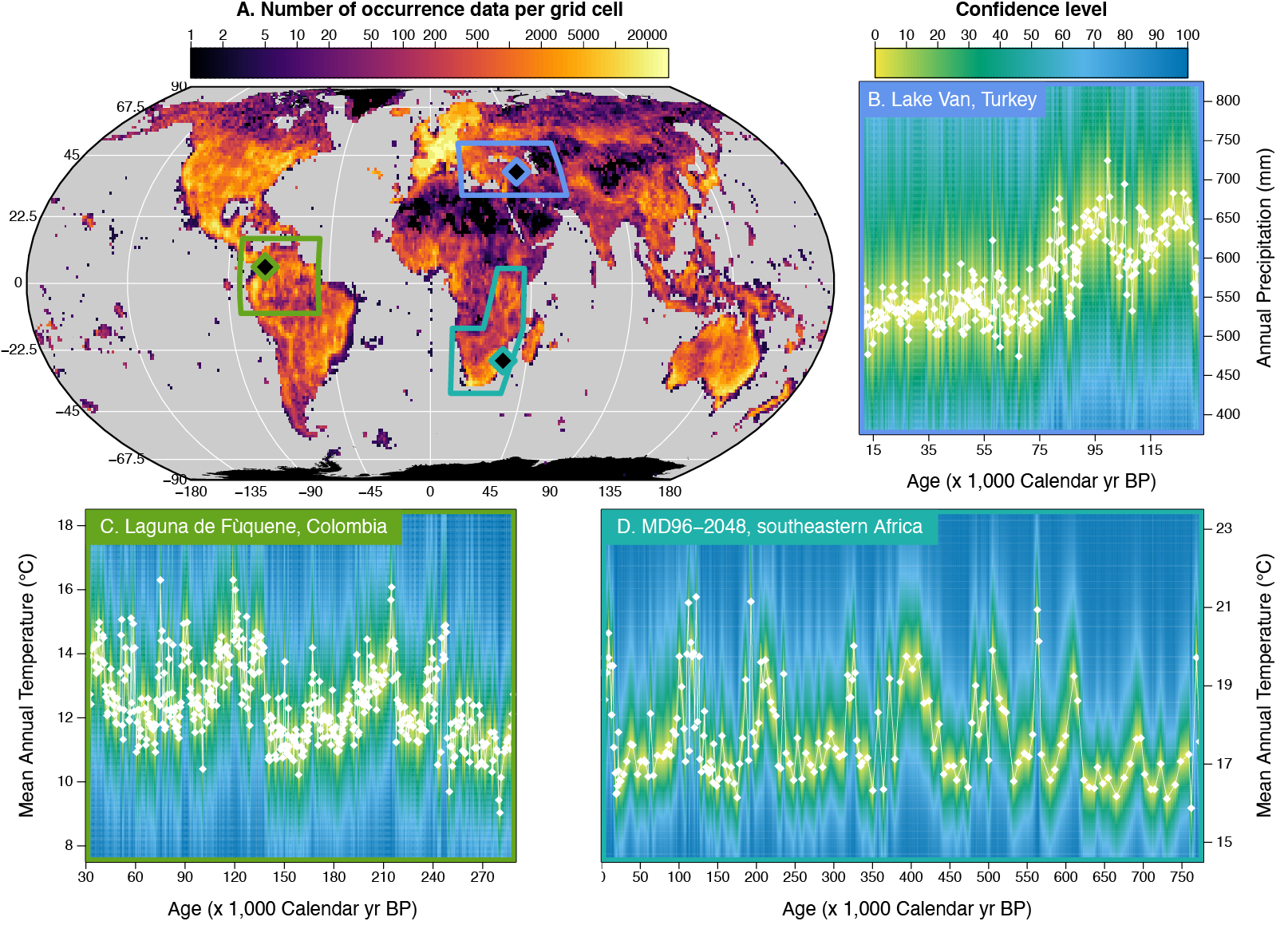
- Generation of clear and engaging representations of probabilistic results.
- Validated by many peer-reviewed studies (link).
Course Highlights
- Theoretical concepts: Discover the principles of the eco-climatological modelling principles underpinning the model.
- Introduction to crestr: Learn all the functionalities of the package: from data modelling to data visualisation.
- Data Curation: Expert advice on preparing and organising data to work seamlessly with CREST’s functions and features.
- Data Interpretation: Help with understanding and interpreting your results to extract valuable insights from your climate data.
- Optimisation: Guidance on fine-tuning CREST’s methodology for better accuracy and efficiency in your climate reconstructions.
✨ Your Questions Answered, Even After the Workshop ✨
At DataSharp Academy, we believe learning is best consolidated through practice. To support your growth and cement what you’ve just learned, we offer four weeks of unlimited post-workshop Q&A access, giving you the opportunity to ask any data-related questions as you apply your new skills to your own projects. We want you to keep practising while building your confidence and independence up.
Agenda
| Day 1 | Day 2 | Day 3 |
|---|---|---|
| CREST: Theory and Model Assumptions | Diving into the details of a CREST analysis | Produce a “v0” reconstruction from your data |
| What you can do with the package | Prepare and Load your data | Opening the black box: Understanding your outputs |
| Hands-on application with “dummy” data | Optimise your calibration data | Round table on how to validate a reconstruction |
Testimonials
Next dates
The next Quantitative Palaeoclimate Reconstructions with crestr workshop will run in January/February, 2026.
Pricing
€400 (excl. VAT) for four days of training
with hands-on applications with your palaeoecological data
AND four weeks of unlimited Q&A after the workshop
This class is limited to 12 participants to ensure individual feedback.
Not sure if this is the right choice for you?
Tell me more about your needs, and I’ll tell you if this is a good fit.
Let’s talk!